
Sports Cars of the Future by Strother MacMinn

Cover Sports Cars of the Future, written and illustrated by Strother MacMinn, was published in 1959 by Sports Car Press, Ltd. It is softbound, 5.25″ x 8″, 128 pages plus cover, and dedicated to John and Elaine (Bond). MacMinn was one of my Transportation Design instructors at Art Center. I remember that he bought a new blue 1970 Camaro. I had a ’70 Camaro also—a subject of another post.

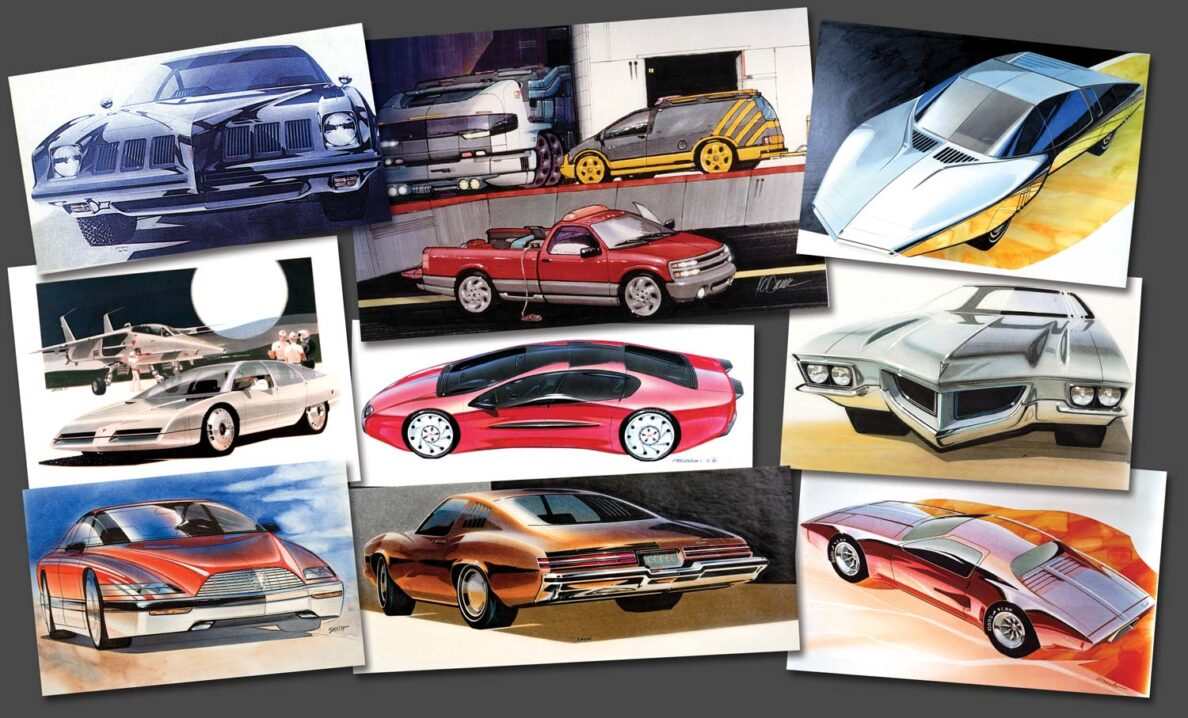
There are many photos in the book of production and styling show cars from various manufacturers, renderings by Strother MacMinn of many of these cars plus several pages of his own designs. This rare, out-of-print book was loaned to me by Richard Nesbitt. Strother died in 1998.


A Man of Wit and Genius

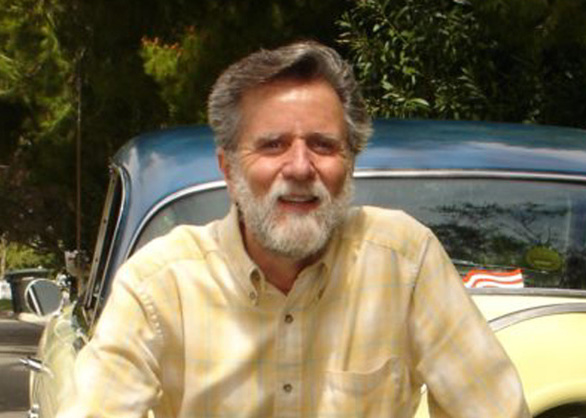
From Coachbuilt.com. As a young boy growing up in Pasadena, California, Strother MacMinn spent every spare moment drawing pictures of cars or pestering salesmen at car dealers to share their brochures and knowledge of the treasures in their showrooms. It was on one such occasion that a kindly gentleman at the Pierce-Arrow agency provided a turn of fate for Strother by disclosing the whereabouts of a service entrance into the Walter M. Murphy Studio, where he met and became friendly with Franklin Hershey.

Franklin Hershey, one of the best designers in that custom body shop, was so taken with young Strother’s sketches that he invited him into a whole new world by having him come to his office Saturday mornings where he showed him the basics of professional body design. This friendship and guidance continued after Hershey moved to Detroit to work at GM, and throughout Strothers’ prep school, summer classes at the Art Center School in Los Angeles and high school years. It eventually led to Strother’s first working job in 1936 in the Buick studio at General Motors Art & Colour Section with Franklin Hershey as his boss.

With corporate approval from GM’s German division, Harley Earl set up a new studio in 1937. Strother MacMinn, John Coleman and George Jergenson, with Frank Hershey in charge and Hans Mersheimer of Opel as design liaison officer, were given the assignment to style the upcoming 1938 Opel Kapitan. It was an exciting enterprise because of its new approach to international styling and included advanced ideas such as built-in headlights, stretch fenders and a clean body form. (That basic model, with face-lifts, remained in production into the early fifties.)

It was with skill and enthusiasm that MacMinn participated in the development of design proposals for GM’s inter-city bus client, Greyhound Lines, Frank Springs styling department at Hudson Motors, Ed Anderson’s Oldsmobile studio, and many others on his long list of credits.

But, according to MacMinn, the best job offer anyone ever had was his part-time teaching job in 1945 at the Art Center College in the Industrial Design department. MacMinn feels nothing can compare with the excitement and stimulation of sharing enthusiasm and knowledge with dedicated, professionally oriented young design students. Perhaps that is why he has been teaching part-time for the past 41 years.

In addition he has worked independently as a designer of: aircraft seats, household products, and fiberglass boats. And as a consultant in 1979, he helped to found the first Southern California advanced concept satellite auto design studio for the Toyota Motor corporation.

Since 1953 MacMinn has written and illustrated articles for Road & Track, Motor Trend, Automobile Quarterly, and Car Graphic magazines in addition to historical catalogue essays for the “Automobile and Culture” and “Detroit Style: Automotive form 1925-1950″ exhibits in Los Angeles and Detroit.

Strother MacMinn’s lifelong love of the automobile has led him to own a 1937 Cord 812 phaeton and a 1929 Rolls-Royce P-1 Derby phaeton. He kept and still drives the 1951 Jaguar XK-120 roadster that he bought for $2400 in 1953.


An excerpt from the Coachbuilt.com article about chrome

Chrome, too, can be a temptation. Cadillac introduced chrome plating in 1929 and it quickly spread throughout General Motors and then the industry. Nickel, with its lovely warm hue, had had a soft richness that was appealing, but when that super-hard blue-white of chromium came along, which needed little polishing and which seemed to last forever, nickel quickly became pass. Few owners chrome inappropriately on cars that predate 1929, but on later cars, there’s a tendancy to chrome everything, including parts such as water pipes and electrical conduits that weren’t chromed originally. Chrome wire wheels appear in such abundance today that one is tempted to think that all classic cars had plated wheels. Yes, chrome wire wheels were possible as the problems of embrittlement were solved, but they were rare.

The problem is compounded when owners add whitewalls to chrome-plated wheels. Such a combination again shouts “Look at Me” too readily. Strother MacMinn, who served as Chief Honorary Judge at Pebble Beach for twenty-five years, always maintained that a car could have chrome wheels or white sidewalls, but not both; he felt the eye was so drawn to the combination of whitewall and chrome wheel that the general line of a car, its balance as a whole, was distorted.

A great Concours d’Elegance automobile is a combination of beauty, accuracy of restoration, and an indefinable melange of “star” qualities. But above all, a car must reflect its own period, especially in matters of color and decoration. Strother MacMinn, a famous judge with strong artistic gifts, comments on taste: “Either choose chrome wire wheels or white sidewall tires but not both. Too gaudy.” He adds, “All classic cars were not red or cream!” (Two favorite colors of restorers which often show to advantage on a field). The best car may quietly state its own period with a delicate refinement, even with understated elegance, that, when new, would have reflected the buyer’s taste. Good judges will see this on the field.


Gallery of artwork from Sports Cars of the Future by Strother MacMinn

Larry Shinoda, Part 2

Larry Shinoda, Designer of the Ford Mustang Boss 302

Source: From the Auto Editors of Consumer Guide.

Larry Shinoda brought to Ford a sense of no-nonsense car-guy cool. His work on the 1969 and 1970 Ford Mustang Boss 302 is all the evidence that statement requires.

Ford Vice President of Design Eugene Bordinat gave the always-outspoken Shinoda his first automotive design job, in 1954, only to see the new graduate of L.A.’s Art Center School leave Dearborn within a year. After a brief stint at faltering Packard, Shinoda was hired by General Motors design boss Harley Earl and was soon working with Bill Mitchell, who soon succeeded Earl, on futuristic concept designs—and future Corvettes.

Shinoda followed GM president and longtime friend Semon E. “Bunkie” Knudsen in jumping to Ford, in 1968, but both were fired after less than two years in a widely publicized shake-up. Even so, both left their mark on Mustang, the designer most famously with the fast, tight-handling Boss models of 1969-71. Shinoda and Knudsen went on to form RV maker Rectrans, then parted company in mid-1975, when Shinoda opened his own design business. Shinoda died in late 1997 at age 67. Here, in Shinoda’s own words, is the story of his work on the Boss 302:

One of the first things I did on coming to Ford was straighten out the Boss 302. They were going to call it the SR2. They had all this chrome on it. They were going to hang big cladding on the side, big rocker moldings. It was going to be more garish than the Mach 1. They had a big grille across the back and a great big gas cap and fake cast exhaust outlets and big hood pins and a really big side scoop. I took all that off, went to the C-stripe decal and painted out the hood, did the rear spoiler and the window shades and front airdam. That vehicle ended up being a profit-improvement program. They only built a few, but they made money on each one.

Bunkie Knudsen and I knew that to capture some of the youth market you had to have street machines that would run like your race cars. Ford had never done that before, and obviously Knudsen wanted to beat the Z-28 Chevrolets at their own game. So that was my first task coming in there, doing show cars, and getting the Boss going. I knew what kind of horsepower the Z-28 had, where its strong points and weak points were. So I had to find out quickly what the Mustang was all about and what the new developments were.

ShinodaFord
Larry Shinoda at Ford.

And what they were working on was pretty much wrong. They had an engine with high horsepower but enormous ports, so the power was very, very peaky. They needed something with a much flatter torque curve. And they needed better vehicle dynamics. They were saying, “All it has to do is go fast.” I said, “That’s not really where it’s at. The Z-28 gets through corners well because it handles well. And it accelerates well off the corner because it got through the corner faster, so you think it’s got more horsepower than it does. Another reason it’s going through the corner faster is aerodynamics. It has enough downforce in front, balanced with downforce at the rear. Your car has some downforce at the rear with a little built-in spoiler, but not in the front. And the suspension isn’t quite right.”

They said, “What do you know about it? You’re a designer.” I said, “I’m a designer, but I’ve also got common sense, and I know a little bit about vehicle dynamics.” Ford at that point had never used their skidpad to check out dynamics. Their skidpad at the Dearborn test track was all torn up at the time. I got an appropriation to repave it.

I took some people in a company plane and flew them over the GM Proving Grounds. I said, “See that? It’s Black Lake.” “What’s it for?” I said, “You’ll see.” Sure enough, here’s Roger Penske’s Trans-Am Camaro, the Sunoco Camaro, running on a skidpad. I said, “That’s what you need. You play with aerodynamics, suspension, roll stiffness, and tires, and you find out what’s going to get around there the fastest. Of course, you’ll have to do some adjustments at the race track.” In those days, most of the people in Ford’s performance department didn’t understand vehicle dynamics, which was kind of sad. The people at Chevrolet and, basically, Frank Winchell, wrote the book on that.

And as I said, I removed all the inappropriate things they were going to put on the Boss, including the interior. I think it saved quite a few dollars when we counted it all up. Don Petersen, who was in product planning at the time, got a big kick out of that. He said, “You trying to do our job for us?” I said, “No, just trying to do the job, period.”

But there was only so much he could support. Unfortunately, I made bold statements. When someone asked me, “What are your ambitions?,” I said, “to be the first Japanese-American vice-president at Ford Motor Company. I don’t think Gene Bordinat liked that.”


Back to Ford

Source: 60-page reprint from Car Styling Vol. 18, 1977: The something big turned out to be the resignation of GM Vice President Semone Knudsen in March, 1968. Knudsen passed over for the GM Presidency in favor of Ed Cole, was offered the Presidency of Ford Motor company by Henry Ford II himself and Knudsen accepted. Ironically, Knudsen’s later father had left Ford in favor of GM and had risen to the GM Presidency years earlier.

Shinoda and Knudsen had become close friends at GM and admired each other’s talents. It was correctly assumed in the industry that Shinoda would join Knudsen at Ford and together they would develop cars to challenge GM’s best, especially including the Corvette.

79shinoda
Ford Mach II

But things did not go well at Ford and Shinoda didn’t join Knudsen until May 1968. Once there Shinoda went all out. His position was Design Executive, Corporate Projects Design Office. He was responsible for the design of all high performance vehicles and show cars. In this position he designed the following:

HIgh Performance:
Mickey Thompson’s Autolite Special Landspeed Record Car
Autoline”Lead Wedge” Electric L.S. R. Car
Mickey Rupp’s Super Sno-Sport Ford V-8 Powered Snowmobile
Ford Drag Clinic Vehicles
TASCA “Street Boss” Mustang

Production:
Boss 302 Mustang
Torino Talladega
Cougar Eliminator
Cyclone Spoiler I

Show Cars:
Super Cobra, Torino
Saturn II, Thunderbird
Scrambler, Ranchero
Aurora II, L.T.D. Station Wagon
Cougar Eliminator

In February 1969, Larry was promoted to the position of Director of the newly formed Special Projects Design Office. He was responsible for the following: The design of all High Performance Production and Limited Production Vehicles. The design and build of all show vehicles. The design of the Displays and Exhibits for all major autoshows in which Ford participated. In this position, he directed the design of the following:

High Performance:
King Cobra, Torino Design Study
Cyclone Spoiler II
Mickey Thompson’s Drag Cars
Eddie Schartman’s Maverick
Torino Pace Cars (NASCAR)
Mustang Pace Cars (A.I.R.)

Production—1970
Boss 302 Mustang
Bos 429 Mustang
Cougar Eliminator
Cyclone Spoiler
1971 Pinto—Theme Model/Re-Direction
Mach II-C Mid Engine Corvette Challenger

Show Cars:
Maverick Runabout
L.T.D. Berline
Econoline Kilimanjaro Safari Van
Torino Wheely Drag Simulator
Mustang Milano
Mark III Phaeton—Dual Cowl/Theme Model for Mark IV Silver-Cranberry Interior Production Model

Displays & Exhibits for Auto Shows:
Dallas State Fair
Detroit Auto Show
Chicago Auto Show
New York International Auto Show

(Although) Shinoda was at Ford long enough to accomplish many goals, which included a Corvette competitor “the Mach II-C” mid-engined sports coupe, which was to be US built with US components, but was shelved for the political bought-off/ill-fated Pantera by De Tomaso.

The role played by Shinoda and Knudsen had significant impact on the Ford Production models for quite some time. Both men were fired in less than two years. Click here to read an interesting article from September 19, 1969 Time magazine about Knudson being fired from Ford.


RecTrans and White Motors

From the Car Styling reprint: For the first time in their careers, Knudsen and Shinoda found themselves unemployed. But not for long. Knudsen headed for Florida to collect his thought and asked Shinoda to give some thought as to what kind of business they should set up. Soon, both agreed it would be motor homes as it was the recreational vehicle industries number one growth area.

RecTrans was formed in early 1970. By the autumn of 1970, the Discoverer 25 rear wheel drive on Dodge chassis and front wheel drive Oldsmobile powered Discoverer 27 ft. models were designed and prototyped and introduced at the R.V.I. sow in Louisville. Production of the Discoverer 25 on Dodge chassis started in early 1971.

In April 1972, Knudsen was appointed Chairman of the Board of White Motor Corporation. Rectrans was absorbed by White and Shinoda became Vice President on charge of Design. White, a Cleveland, Ohio based company wanted Shinoda to move to Cleveland, but he fought the decisions and started a design operation in Madison Heights, Michigan, a norhtern Detroit suburb. His reasonong was Detroit was the center of activity and the best talents and craftsmanship were available on most any basis. He used many moonlighters and part-time help to get the first projects off he ground. The first major unit was the “Road Commander.” White needed a new image and new products to bolster this image. The Road Commander was basically a facelift which transformed the old 7000 unit, which was referred to by the truckers as the “Chinese Freightliner,” as it was very heavy and had an antiquated look to it. Shinoda was asked to just change the grille panel for this new look, but he removed all the riveted on fiberglass panels and restyled them in clay giving the unit a whole new look. This was accomplished in two weeks. When White’s management first saw it they were dumbfounded. They, then asked how soon could it be prototyped and could a movie be made for it for their national sales meeting. The date of the review was February 1 and their meeting was February 22. The midnight oil flowed and the running prototype was completed on the eve of the 17th. The unit was a hit of the show and its sales increased 74.9% in the first six months of production. The Rad Boss conventional was next and also very successful.

Shinoda’s design activities continued to grow in scope and importance, and designs for a new concept lightweight combination truck and low cab forward model Road Xpeditor 2 followed. These were prototyped and put into production. Around this time there was a move to a larger facility, shared by the design group and Advance Products Division. The facility had a very nice setting and was located in Farmington, Michigan (northwest Detroit).

But the economic situation after the oil crisis gradually worsened, and White Motors found themselves in financial difficulties as the slump hit the heavy truck industry, and the company closed down or sold off units considered expendable. So, Shinoda’s corporate design staff and the research group were closed down.

May, 1976, and Shinoda was out of work again, but it also meant his independence.


Shinoda Design Associates Incorporated

From the Car Styling reprint: He started up his own business, called Shinoda Design Associates, Inc., with a staff of five, in Livonia, Michigan, west of Detroit. Now he has a staff of 14: designers, clay modelers, technicians, fabricators and engineers. His first client was the Emcor Division of GF Business Equipment. the aaignement was tough, to redesign a group of electronic enclosures without any structural changes, but it was done to the client’s satisfaction. The next client to turn up happened to be his former employer, White Motor Corp. The truck business was turning the corner and heading up. The Farm Group of the company also contracted Shinoda as a design consultant for their product lines.

The Shinoda Design Group is also doing work in the light truck/van field, and designs for motor homes class A, B and C.

Shinoda says the future is wide open and that his group is ready for anything: ski equipment/clothing, sail boats, power boats, electric commuters, kit cars, motorcycles, golf equipment and whatever needs the proper design approach to lure the buyers and show profitability for his clients.


Other Photos from the Car Styling Reprint


1990 Corvette C4 Shinoda/Rick Mears Special Edition Corvette

ShinodaMearsC4
I only saw Larry Shinoda once at the SEMA show in the early 1990s. I have this poster I picked up at the show of the Shinoda/Mears Special Edition C4 Corvette.

From Illustrated Corvette Series website. The Rick Mears Special Edition came out of an interesting mix of talents. Mears, a three-time Indy 500 winner, was the front man, Corvette designer Larry Shinoda was the stylist, and Jim Williams was the businessman. While this certainly wasn’t the first body kit for a Corvette, it was one of the cleanest. Mears was at the top of his racing game by the early ’90s. Rick won the Indy 500 in ‘79, ‘84, ‘88, and ‘91! He was the Indy 500 “Rookie of the Year” in ‘79, and racked up six Indy 500 pole positions. Mears retired from racing in 1992 with 29 CART wins and 40 pole positions.

Larry Shinoda is generally known as the designer of the 1963 Stingray. While this is correct, the actual Stingray shape was first drawn in 1957 by Pete Brock and Bob Veryzer as a concept study called the “Q-Corvette.” Shinoda took the sketch and made it into a real car. Larry would go on the design the Corvair Monza show car, the Mako Shark, and the Boss 302 Mustang.

Jim Williams was the president and CEO of Golden State Foods, a food preparation company that services all of the McDonalds restaurants. In the late ’80s, GSF was an associate sponsor of the Penske racing team.

Shinoda showed some sketches to Williams and Mears at the Long Beach CART race in 1989. Both men liked the design and agreed to go into business. Shinoda-Williams Design, Inc. was formed and started making kits in 1991.

Shinoda’s design wasn’t just another make-over kit. The front and rear spoilers, along with the sculpted side panels lowered drag coefficient from .34 to .30! As a throwback to his old Mako Shark days, Larry gave the side panels some “coke bottle” style. All of the parts were barrier crash tested and designed so the the stock Corvette tire jack could be used. Except for the front chin spoiler, the factory ramp angles were maintained.

The kit was made up of 11 pieces that would attach to any ‘84 to ‘91 coupe or roadster. The panels were made from primed, semi-rigid polyurethane material. Also included were front fog lights, black finished stainless steel exhaust tips, floor mats with the Mears logo, a “Shinoda Design” badge, a “Rick Mears Special Edition” badge, and fasteners. Assembly time was 25 hours. The kits were designed to use common garage tools, used stock mounting points, and required little drilling.

The cost of the kit was $5,200, plus $2,500 to $3,000 for installation. Paint was another extra. The total cost for entire kit project was around $10,000. That’s why not many kits were sold. In the early ’90s, all regular Corvettes were under the shadow of the ZR-1. Extra money usually went under the hood. Shinoda pitched the kit to Chevrolet as a 1992 RPO option. They passed.—K. Scott Teeters


Larry Shinoda Rendering from Packard, 1956

Thanks to Brett Snyder (Andrew Johnson Gallery)
Shinoda_Clipper

Larry Shinoda, Part 1

Larry Shinoda—Car Enthusiast,  Student at Art Center. His first time at Ford, then Packard, and then GM Styling.

His time at Ford, White Motors, and as an independent designer will be featured in Part 2.

50shinoda

More information about the Monza GT, including the brochure, is under the GM Brochures link.

Text, images and captions on this post come from a 60-page reprint from Car Styling Vol. 18, 1977. I saw Larry Shinoda only once, at the SEMA show in the early ’90s.

Forty-seven year old Larry Shinoda is one of a number of Sourthern California native sons who have carved out successful careers in the automotive industry in Detroit. Few men have so dominated the field of transportation design from passenger automobiles, land speed record cars, Indianapolis and Can-Am racers, to motor homes, heavy-duty trucks, dragsters, snowmobiles, go-karts, farm tractors, farm implements, garden tractors, portable hi-pressure washers, and even lawn mowers, Larry Shinoda has lent his legendary touch.

Lawrence K. Shinoda. A child prodigy raised in the west coast world of racing. A man who blew apart or conceptions of what a car should be. A stylist/designer whose career has been as controversial as many of his designs.

Shinoda is outspoken, candid, humorous, and firmly believes in what he is doing. And what he is doing is creating some of the most exciting machinery and products seen on or off the road.

Shinoda spent twelve and one half years with General Motors. By the time he resigned his position as Chief Designer for Special Vehicles in 1968, he had left his imprint on every 1963 production and special show Corvette of the era, not to mention every special show Corvair, including what he feels is one of his personal most favorite projects and best contributions in design, the Monza GT show car, some of the Wide-Track Pontiacs, Z028 Camaro, the Astro series of show cars, and a fistful of others.

He was an artistically gifted child. A giant painting he did while in the third grade was displayed at the Los Angeles Country Fair, and later in the Los Angeles Art Museum for several years. But for Shinoda, the road to auto styling/design was through racing.

Nisei Shinoda was born in Los Angeles, California, March 25, 1930. He attended grade school in highland Park and Junior High School at Luther Burbank Junior high.

The Second World War saw Larry and his family evacuated to the Manzanar Concentration Camp in early 1942. This camp was in the cold, dusty, Owens Valley of California, situated between the Sierra Nevada/Mt. Whitney range and Inyo-Kern/Death Valley range. Larry’s father, the late Kiyoshi Shinoda, died when Larry was only three years old. His father’s family founded the San Lorenzo Nursery Company in San Lorenzo, California (near Oakland) in the early 1900s.

On graduation from Eagle Rock High School in 1948 and two years at Pasadena City College, Larry was called to active duty in the Air National Guard/Air Force fot two years which included a 16 month stint in Korea. He decided the nursery business was not his cup of tea and was drawn to the automotive industry through racing and by enrolling in Art Center School (Art Center College of Design).

While attending Art Center, Shinoda was racing his ’29 Ford roadster at the drag races turning the quarter mile at 138.88 MPH with an Oldsmobile V8 engine. In 1953 he was at the SCTA Bonneville Nationals with a Chrysler powered roadster that earned him the Class D record with a two way average of 166 MPH. He was also eligible for top eliminator at the first NHRA Nationals at Great Bend, Kansas in 1955. He won the Fuel Roadster class with an Ardun overhead adaption for the Ford flathead V8 engine. The Ardun heads were originally designed by Zora Arkus Duntov (the engineering father of Corvettes) while he worked for the Allard Motor Car Company in England. Duntov was to become a good friend and highly repsected person for Larry in later years at General Motors.

Business with Ford

In late 1954 Ford Motor Company came to California to interview candidates for the Ford Styling Group in Detroit. The top executive of the group was Gene Bordinat, presently the Vice President of Design at Ford. Shinoda had studied at Art Center, and considered himself amply qualified. He was called by the late John Coleman and told to get his stuff together and come in for the interview. Dressed in pegged denim Levis, a Howard Racing Cam T-shirt, and an outlandish Hawaiian shirt, and armed with some race car renderings and car sketches (many of which he had just completed the evening before and while he was waiting for the interview), Shinoda was ready for the Ford brass.

To his way of thinking, Ford would be getting the better part of the deal. Shinoda would have to leave sunny California, his ten dollar a week room and board set-up and a better paying job as a commercial artist at Douglas Aircraft for cold, expensive Detroit and less initial pay. Shinoda wanted Ford to pay trip expenses for him (and his race car) to Detroit for a six month trial. If everything worked out, fine. They would pay him his asking price. If not, he was heading back to Los Angeles at his own expense. Shinoda recalls saying, ”You guys need me more than I need you.”

Despite the young man’s outlandish appearance and outrageous demands, (or maybe because of them), the Ford people were impressed by Shimoda. They agreed to give him a try and Larry Shinoda was on his way. Although the Ford Motor Company was later to have a dramatic impact on his career, Shinoda only stayed a brief year.

During that year he worked for John Najjar in an Advanced Design Studio. Designing portions of the Mercury Turnpike Cruiser show car. He was then transferred to Lincoln Studio and worked for Elwood Engle (who later went to Chrysler as VP of Styling), and George Walker, Ford’s VP of Styling). He worked on the ill-fated 1958 (bigger is better?) Lincoln.

Shinoda moved over to Studebaker-Packard in January 1956. But after thrashing for three months on the new Packard models, The Clipper/Predictor series, and a Studebaker Hawk show model for William M. Schmidt, VP of Styling, Dick Teague, Director of Styling, and his own boss Duane “Sparky” Bondstedt, he realized Packard was doomed as the models were shopped back from the tooling source with a “crash first” notice. While at Packard Shinoda worked with Dick MacAdam (now Chrysler VP of Design), Toshi Sakow (now heads up his own design firm in Teaneck, New jersey) who designed the interior of the European Air Bus airliner and had design many othe rwidely diversified products. John Z. DeLorean, was also at Packard as Chief Chassis Engineer. He and Shinoda left quickly to join GM in September that same year.

Larry at GM

DeLorean to Pontiac as assistant Chief Engineer, under E.M. “Pete” Estes. Shinoda to GM Styling. Shinoda was interviewed by Jules Andratti and Mr. Harley Earl. Mr. Early hired him personally.

After some design work for Chevrolet on the 1959 models,he moved to Pontiac where he helped design the 1960-61 wide track models. Shinoda then moved to an advanced design studio and had his first involvement with Zora Arkus-Duntov on a very early attempt at designing a midship engine Corvette. Ron Hill was the studio assistant and then Chief Designer. Another move to a body development studio, taxed Shinoda’s patience, so he designed Buicks, Cadillacs, and limousines with racing numbers, mag wheels, stripes, and other goodies which upset his boss, to say the least.

He was finally transferred to the studio which was right for him. Soon some of the most exciting automobiles of the decade began coming out of the special Bill Mitchell/Shinoda studio, which was under the lobby in the basement. The Stingray, the 1963 Corvette, the Mako Shark I and II, the Corvair Super Spyder, the Monza GT and Monza SS. The Monza Jr. (Chevrolet Jr.), The Cerv I and II (Chevrolet Engineering Research Vehicles) for Duntov. The Astro I and the mid-engined Astro II, the XP-819 rear engine Corvette for Chevrolet Research and Development. The theme model for the 1968 Corvette production model, and a raft of specials for Chevy R & D. The Chaparral 2C and 2D race cars.

Shinoda had been promoted to Chief Designer of Chevrolet Studio 3 and moved to the warehouse (bowling alley) studio prior to the Mako Shark II and 1968 theme Corvette.

He was them promoted to Chief Designer for all special vehicles, which included coordinating efforts for engineering staff (Frank J. Winchell) and the corporate R & D groups. During this period he designed a three-wheeled commuter vehicle for Engineering Staff and a four wheel commuter car for Chevy R & D called the “Flint-stone.” It was a small front wheel drive four cylinder Corvair powered unit, which was bootleg modeled at Chevrolet Engineering. Shinoda worked with Vince Piggins and his product performance group on the 1967 Z-28.

Byt 1968 Shinoda was growing restless. Although he maintained his ties with racing, through working on Indy 500 crews, designing some items for Jack Brabham, Bruce McLaren, and the snowmobile line for Rupp Manufacturing and its others products (go karts, mini-bikes, and the off-road Ruppster). Shinoda was looking for new challenges. He was considering an offer from Toyota of America, but some of his friends told him to cool it—something big is in the wind.

More Studio Cartoons. And a Few Stories. And some Quotes.

Andy Hansel and Brian Wuerker cartoons, stories, and quotes from the “heartbeat of the industry.”

Jerry300When Jerry Hirschberg left for Nissan Design in 1980, Andy Hansel christened his departure with this depiction of Jerry as a full-fledged Samurai.

The studio movie. In the late fall of 1979, Jerry made an 8mm movie in the studio that was shown at the Christmas party. It was a Kojak spoof complete with a 4-door Buick Century. The “plot” was pretty thin. A full-sized clay model was reduced to the convenient 1/25 scale model and stolen by the nefarious Al Flowers. Our Kojak (I can just barely remember who played him, but not his name) was responsible to recover the stolen design. If I can ever get that movie and digitize it, you’ll see it on Dean’s Garage.

One time we were having an end of the world meeting in Jerry’s office. You know. GM is on the brink of ruin and it’s “up to Buick Studio to save the corporation” kind of thing. All tongue in cheek. In reality there is a panic in the building and we’ve got to do something to keep the heat off the studio. Anyway, there was a lull followed by an an uncomfortable silence in the office (which was really too small for the entire studio, all jammed in there). Suddenly the phone rang. (Usually when the phone rang in the studio and the studio clerk wasn’t around nobody would answer it. Then somebody would yell out, “Nobody move. It’s the phone.”) After four, maybe five rings in the silent office, George Prentice slowly took a step to the phone, picked it up, and patiently answered, “General Motors.” General Motors? Kinda vague, George. He might as well have answered, “western hemisphere,” or “third planet from from the sun.” It was pretty funny, at least to me.

HallWalkers

An incredible series of caricatures by Andy Hansel. He captured the gestures, poses, stances, clothing, and proportion perfectly. Pictured are Ed Taylor, Bernie Smith, Dave Holls, Stan Wilen, Chuck Jordan, Jack Humbert, and Irv Rybicki. Thanks to George Camp for sending me this.

There were always studio music wars. Someone would bring in a stereo or they’d buy one out of the coffee fund. Station battles followed. Seems like in the morning the music would be boring but non-controversal. Then after lunch sometimes Ted Schroeder would put on jazz. Jazz wasn’t too popular, but Ted was the assistant and got his way. When Ted would leave the room for some reason, one of the classical buffs might use the opportunity to put on the classical station. Even though it added a touch of needed class to the atmosphere, it was liked less than jazz. I remember Jack Orava hollering, “What is this?” Nobody usually answered. Probably nobody knew. Then Jack would follow up with, “If nobody knows what it is, let’s turn it off.”

One more quote about music. After a classical piece ended there was always a respectful pause. The announcer would come on and say that was such-and-such, Opus whatever, played by XYZ philharmonic orchestra conducted by so-and-so. One time, after a piece ended but before the announcer came on, someone hollered, “Now they’re gonna tell us why we were supposed to have liked that.” By the way, Rock was never tolerated.

Is that all there is? In Olds One studio some nefarious sculptor recorded Peggy Lee’s Is That All There Is back to back on both sides of a 90 minute tape. The first couple of weeks listening to that depressing song played for hours on end were the hardest. Haven’t heard it? Click here.

Jim Perpina was an industrious union clay handler liked by everybody. Jim managed to get enough full-size refrigerators to put one in every studio’s back room. That was really great. Thanks, Jim. But why would Jim do that? Because he kept the full-sized freezers stocked with ice cream. I imagine he did pretty well selling the cold stuff. GM subsidized this vending business and nobody complained. Ice cream seemed to put everybody on a level playing field no matter how high the salary. Speaking of food in the studio, a popcorn craze sept the building. Popcorn poppers popped up in nearly every studio. In the late afternoon the entire building smelled like a circus. I think they eventually banned the stuff.

Doug Byerline frequently made my quote file. “When you’ve counted all the tiles in the auditorium, then you’re ready to count the little boards in the hallway.” He came up with this because it seemed that executives would always walk with their heads down. The upstairs studios and the auditorium were tiled with linoleum, but the hallways and downstairs looked like a wooden gymnasium floor made up of short wood strips. Other memorable quotes of Doug’s: “It ain’t no brougham if it’s got no chrome.” “You can swallow a transmission if you can eat your own words.” “Here cars are our most important by-product.” “You don’t want to take a step back and really look at what we do here. It makes baseball look important.” “Hey, it’d fun just to model them up and look at them.”

Sports contests were a popular diversion in the studios. At lunch time ping pong tables (made in the shop probably from 3/4-inch birch plywood) would unfold and the games begun. But there were others. In Pontiac One they used to play floor pong. It was just like ping pong except the net was a piece of thick acetate attached to an aluminum pole and suspended from the tops of two chairs. The court was about 10-feet wide by maybe 20-feet. But the granddaddy of all of the sporting events was indoor badminton. Several studios became deeply involved. The large metal angles used for modeling would be clamped to two opposite rails. A regulation net was clamped and suspended from the angles. The floor was quickly taped off to form a regulation court (of course, only the best black photo tape was used). We started buying $60 rackets, and trick indoor birds. One of the guys belonged to a Badminton club in Birmingham and used to bring in used feathered shuttlecocks. It was a lot of fun. We played at noon for several years, and sometimes all day on the last day before the Christmas break. They finally shut it down. There were lots of other contests. Lightweight rubber band powered model airplanes competed in the styling auditorium for duration contests. Orthonopters. Crawling machines. All sorts of stuff.

WuerkerCartoon

Brian Wuerker cartoon. Pictured are Brian Wuerker, Willis Calvin, Jerry Hirschberg, Wayne Vieira, Jack Humbert, Jim Bisignano, Frank Fisher, Al Flowers, Vince DiSessa, and Chuck Jordan. Thanks to George Camp.

The Brian Wuerker cartoon shows Jack Humbert with his suit jacket opened exposing the jacket lining. Jack’s taste in clothing was nothing short of inspiring. He had a tailor in Birmingham that custom made his suits. I remember once studying the carefully chosen cloth. It was a dark suit with subtle colored threads, one of them a bright vermillion. The paisley jacket lining picked up the same vermillion, and so did the tie. The exact shade.

Jack was a patient man. I noticed Jacks MO on several occcasions. When the commotion of a new theme decision would fade, he would then come back every day and make a subtle change to the model. After a few weeks he would redirect the design one small tweak at a time into what he wanted in the first place and nobody was the wiser.

This short story comes from Pontiac 2 studio. One day someone emerged from the back room motioning everyone to follow him back silently. So we all eventually gathered together near the door to the restroom. The restrooms at design staff are tiled with shiny gray tile on all four walls and the floor. The situation? One of the guys from the studio was asleep in a stall. Snoring. The plan that came together swiftly and sliently: one guy on the hinge side of the door, another on the other side of the door, and a third  in between. At the same time, the first guy opened the door, the second reached around and flipped off the lights, and the middleman tossed in two full size Pontiac metal wheel covers. As the door closed, an explosion of sound emerged from behind the door. A mixture of clanging metal and cursing. By the time the victim burst out of the back room into the studio (still gathering himself), everybody was quietly scraping clay, updating drawings, or sketching. What wheel covers? Boy, was he mad. Probably scared him half to death.

A couple more Jerry Hirchsberg stories. Occasionally there would be important in-studio shows where models would be prepared for review by division management. Instead of the studio chief leading the review, Design Staff management would lead the charge. These would be managers that headed studio groups (like Buick, Olds, and Cadillac). The studio chief would be in attendance, but wouldn’t be the MC. So the line up would be like this. On one side of the model would be the upper managers discussing the design. Behind them would be their support people. Off to the side and a few feet back would be studio managers, listening, but not necessarily involved in the conversations. On the other side of the model would be designers and other studio personnel interested in the discussions, unless we were excluded from being in attendance. After a while the discussions would become redundant. Jerry would get bored and start making funny faces. He wasn’t making fun of people (I don’t think); he was making expressions to try and get us on the other side of the model laughing. Which would not be cool at all, because we were facing those who could terminate our very existence. He also had this goofy walk that he would sometimes morph into that was like every joint that made him ambulatory was cross-wired. He was a lot of fun. He just didn’t take a lot of things that seriously. Morale in his studio was always pretty high, in spite of the fact that Jerry had a quote on his office wall that read, “It’s not enough to succeed. Others must fail.”

An interesting place to be was within earshot of executives talking about designs during reviews. I wrote down a lot of them. For example:

“I don’t necessarily disagree.” Jerry Hirschberg.

“I don’t hate it.” Bill Porter.

“I don’t particularly like being in disagreement with anyone.”

Executive one: “I like it.” Executive two (higher level): “I hate it.” Executive one: “We’re saying the same thing in different ways.”

“It has an upscale look with a lot of lines.” Lloyd Reuss.

guindon

Guindon was published in the Detroit Free Press and often featured automotive related satire.

Other quotes overheard.

“This whole design hinges on the doors.” What he meant was the success of a new design would be determined if the the current doors have to be carried over or not.

“I agree with you but I cannot support you on that.”

“This is going to either be right, or it will be wrong. But it isn’t really inventing anything.”

“The goal is not to get yelled at.”

“Frankly, gentlemen, newness scares me.” Spoken by a Design VP and it was’t Chuck.

“I didn’t like that car when it first came out, but since then I’ve done a complete 360.”

“He’s not saying you should or shouldn’t consider these things. Just be aware of them.”

“I’m not saying yes, no, or maybe.”

“I’m almost 90% certain that this deck is going to have to come down some.”

“It’s important that we look like we know what we are doing whether we really do or not.”

“Young man, you are now working for the flagship of the fleet.” Irv to Dennis Little on his transfer to Cadillac.

Steve Pasteiner quotes: “McDonnell is in the building. Quick, everyone, fake a work scene.” “Thursday’s showday so Wednesday we simulate panic.” “If you’re mocking up a car, use cardboard. If you’re doing a train, use railroad board. But if you’re mocking up an aircraft, just use plain paper.”

“I’m seeing a theme emerge, where I jump through the hoop and you crack the whip.” Larry Erickson.

“If it doesn’t work, then you’ve got to say it doesn’t work.”

Dave Holls quotes: “That design is an orphan. It wasn’t invented in the right room.” “We’ve got to get rid of all the nerd areas.” “I want it to remind me of something I’ve never seen before.” “Show it that way until July (Mitchell’s retirement). Then we’ll change it. Don’t worry about it.” Dave once told a story about himself being in the wrong place at the wrong time. He finished by saying, “I felt like a Lutheran in Rome.” That was followed by deep laughter at his own joke.

Ted Schroeder quotes: “You want to stay ahead of the curve here, but only about 10 minutes.” “If you want to do an advanced design, cover the rear wheels. If you want to do a really advanced design, cover all four.”

“The checkered flag has dropped and we gotta get started.”

“Paint won’t save it.”

“That’s the kind of front end that put rambler out of business.”

“You’re only as good as your last sketch.”

“Being young don’t make you smart.” Bill Mitchell.

“Communications are improving. And they are getting better, too.” Roger Smith.

Shoe

Shoe by MacNelly from 1987 pokes fun at the look-alike sedans from the era.

’80s GM Image Cars

Glass is in, or bubble tops made a comeback.

According to Automotive News, January 4, 1988, GM’s ‘Image’ Cars (Buick Sceptre/Lucerne, Pontiac Banshee, Chevrolet Venture, SRV-1, GMC Centaur, and Cadillac Voyage) were to be featured at New York’s Waldorf-Astoria Hotel (like the Motoramas of old) in a show entitled, “GM Teamwork and Technology for Today and Tomorrow.” In the Automotive News article (you can download the entire article in PDF format here or at the bottom of this post), this show was intended to polish a badly tarnished image and silence criticism of the corporation. These image cars became Chuck Jordan’s number one priority when he became Vice-president on October 1, 1986. The article is an interesting read with quotes from Chuck Jordan, Design Staff VP; Lloyd Reuss, executive VP of North American car operations; Phil Garcia, chief designer of Advanced Studio 1 (Buick Lucerne); Allen Young, chief designer of Advanced Studio 4 (Cadillac Voyage); Don Lasky, chief designer of Chevy 1 studio and designer Bob Munson (Chevrolet Venture); Dave North, chief designer of Olds 2 studio (Olds Aerotech); Jim Brinkerhoff, interior designer of the Centuar; and Clark Lincoln, chief designer of Advanced 2 Studio (SRV-1).

The automotive industry is in a mess right now for a variety of reasons, not the least of which is decades of government intervention. But corporate thinking was also often part of the reason why things are like they are now. This article in Automotive News sheds some light on what the thinking was like in the ’80s. Sometimes you have to break some rules to come up with something new. But sometimes something even newer can emerge from staying within the rules and solving old problems in more creative ways. That’s tougher, though.


Pontiac Banshee

bansheepub1

The Banshee is a futuristic Trans Am. “The Trans Am is the personification of what a Pontiac is. The car exhibits Pontiac’s requirements of being exciting and performance-oriented through aggressive use of materials and shapes,” stated Chuck Jordan. Again glass is used as sheet metal. Tom Peters designed the Banshee.

I’m probably going to get into trouble here. The Banshee and SRV1 influenced the ’92 Camaro/Firebird designs. That helps explain why the production cars looked the way they did and why perhaps they weren’t as successful in the marketplace as they could have been. The SRV1 was essentially a mid-engine design, and the Banshee was a three-dimensional sketch with no visual clues as to where the engine might be. With the base of the windshield so far forward, it also looked like a mid-engine car. The ’92 F-cars had a similar “cab-forward,” mid-engine look about them. I have no issue with mid-engine designs. But the familiar and popular F-car package consists of a front engined, rear wheel drive package with a long dash to axle, long hood, short deck, and 2+2 seating. They are wheel oriented cars with great stance. In the ’60s they developed a racing heritage in SCCA’s Trans Am series. That’s the car. Always has been. An appropriate design for an F-car will reinforce the architecture for all it’s worth. But the ’92 F-cars had the center of the windshield over the center of the engine! Why force a mid-engine design to work on a front engine car? Don’t get me wrong. A 4th generation Camaro SS will still turn my head, but there is something fundamentally dishonest about the design. And they are a pain to work on with the back half of the motor under the windshield structure. In contrast, Mustangs in those years still looked like Pony cars.


SRV1 (Stealth)

srv1

According to Automotive News, the SRV-1 loosely represented Group Lotus. Clark Lincoln, chief designer of Advanced Studio 2, said that it was known internally as the Stealth and designed to be the ultimate advanced two-seater sports vehicle. The car was proposed to have all sorts of electronic gadgetry, including sticks to steer the car, doubling as a shifters (somehow). Communications systems, voice-activated controls, heads-up display, and night vision. Whew. I’m missing the last page of the article so there might be more, I don’t know. The car is a really beautifully executed styling exercise, and influenced the design of the ’92 Camaro. Let’s just let it go at that. I do remember a fiberglass scale model of the car on display in the production studio hallway for quite a while. Like somehow it was supposed to inspire new frontiers in taillight bezel design. Nonetheless it was a gorgeous sculpture.


Buick Wildcat

wildcattrack

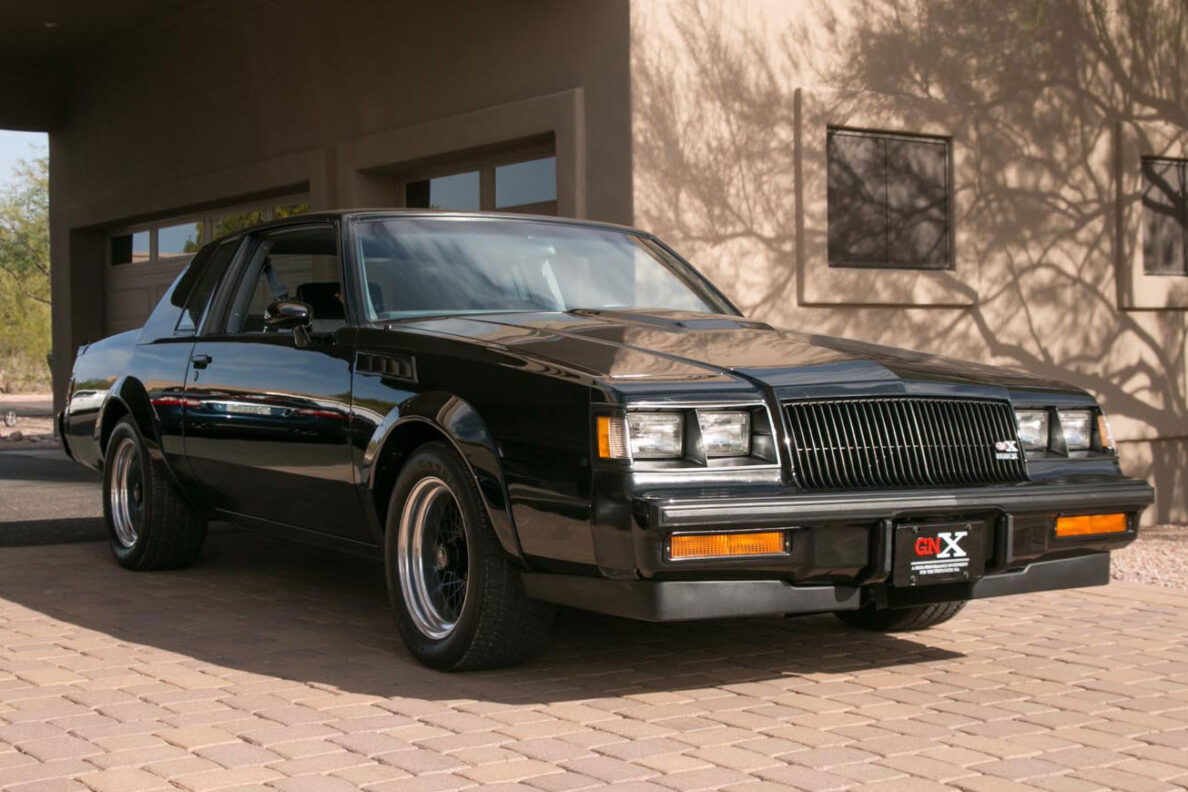
The Wildcat brochure (you can download the PDF here or at the bottom of the post) explains the features of this running car. It is interesting that even with all of the valve train and fuel delivery sophistication, the DOHC 3.8 litre V-6 developed a modest 230 horsepower and 245 lbs. ft. of torque at 4,000 RPM. Just a few years later the pushrod Buick Turbo V-6 installed in the Grand Nationals and 1989 Pontiac Turbo Trans Am would put out closer to 300 horsepower and 340 lbs. ft. of torque at a stump pulling 2800 RPM. The drive train of the Wildcat was interesting. All wheel drive with the transmission in front of the engine. I don’t remember ever seeing the car at GM or anywhere else.


Oldsmobile Aerotech

aerotech1

The Oldsmobile Aerotechs were a series of experimental high-speed vehicles created between 1987 and 1992 incorporating the latest in performance technology with the intention of breaking multiple automobile speed records. The first such car was driven by four-time Indy 500 winner A.J. Foyt to a world closed-course speed record of 257.123 mph (413.788 km/h) on 27 August 1987 at the 7.712-mile (12.411 km) test track near Fort Stockton Texas. Prior to this, on 26 August 1987, the car had posted a top speed over a mile of 267.88 mph (431.10 km/h). The car consisted of a March Indycar single seat chassis enclosed in an extremely efficient aerodynamic body shell. It was powered by a highly turbo-charged version of the 2-litre Oldsmobile Quad 4 engine. The Aerotech body was designed by GM Design staff and was one of the sleekest vehicles ever developed for use on a high speed track. The design of the Aerotech included the capability of adjusting underbody sections to control the distribution of downforce, front to rear. Oldsmobile produced three versions of the original Aerotech to prove the capabilities of the company’s Quad4 engine. Two were short-tailed (ST) versions and one was long-tailed (LT).

Subsequently, between December 6–14, 1992, another version of the Aerotech, this time powered by a 4.0 litre Oldsmobile Aurora V8 engine and fitted with lights, broke 47 speed endurance records including the 10,000 and 25,000 kilometre world speed records. Other national and international speed records ranging from 10 kilometres to 24 hours were accomplished by a team of drivers working 24 hours a day for 8 days. These records were also set at the Fort Stockton test track.

I was in Olds 2 Studio when the project was started, and saw it being tested at the wind tunnel.

According to Dave North, “The premise of the Aerotech was an engineering project more than a design exercise. Form followed function more than usual because the car had an assignment…to run as fast as we could.” Dave continued, “We have a car in the studio now…it is a replacement for a production car for the 1990s. You can see some of the Aerotech in it…the areo influence and the smooth, integrated shape—one shape being the whole design of the car, not with pieces tacked on.” I was in the studio at the time, or had just been transferred to Cadillac. The only car I think of that fits his description is the 1992 Olds Achieva SCX Coupe.


Olds Aerotech Video

Video of the 1987 Olds Aerotech concept car driven by racing legend A.J. Foyt at the Fort Stockton Test Center in Texas. Turn your sound off. The background music is awful. But the video is interesting. Ed Welburn is in the tape.


Aero 2002 (Epcot Car)

epcottechcenter650

Gray Counts designed the Epcot Car, so named because it was created for GM’s Epcot display at Disney World in Florida. In the gallery there is a magazine ad that featured the car and the words, “We’re the best GM ever.” The Epcot car, called the Aero 2002 in the ad, was an experiment in low drag aerodynamics. Quite a departure from the Bill Mitchell days.


Cadillac Voyage

cadillacvoyagepatio

The Voyage was originally envisioned as a future Seville, and designed to take the division a step beyond where it is now. Originally designed to have a V-12, the car appeared at the New York show with a V-8. “It’s a question with Cadillac: Is it time to leave all the past behind and join the world? Cadillac has a wonderful heritage but the Voyage was designed to put it into a worldwide arena. We weren’t just doing it for someone in Kansas. This isn’t the mainstay. This is the lead car,” said Jordan. So how do you differentiate the lead car and put the car in a worldwide arena? Glass. Allen Young, Chief Designer of Advanced Studio 4, states,”One of the main design features of the voyage is the use of glass which covers the top of the car. We did things the glass companies didn’t think they could do in the past. We treated the glass more like sheet metal. The use of glass says that Cadillac is a more expensive car and that there are things we can do with glass that Oldsmobile and Buick can’t do.” Apparently Mercedes and BMW thought differently.


GMC Centaur

centaurpatio2

The Centaur is a mid-engine truck concept with room for five plus a traditional bed in the back. According to Jim Brinkerhoff, the interior designer for the Centaur, the interior design has large buttons and switches making them easily accessible so the driver doesn’t have to take his eyes off the road. This is before cell phones and text messaging. I read once that some state was banning the use of cell phone use in cars. Drivers asked what they were supposed to do with their extra hand.


Lean Machine

leanmachine

The Lean Machine is not in the Automotive News feature article, but is a very significant vehicle nonetheless and needs to be mentioned. It was a great idea that perhaps wasn’t a product for General Motors directly, but GM possibly should have done something with it. The concept has been successfully copied by several companies. Included in the post are two PDFs that can be downloaded either here or at the bottom of the post. One is an Epcot brochure, and the other an article from Road & Track magazine.


Buick Lucerne

lucernepatio

First called Riviera, the Lucerne was an attempt to capture the essence of Buick. Jordan stated in the Automotive News article, “The image words for Buick are substantial, massive, substance, graceful, muscular grace. But that doesn’t mean Buick’s got to be a big lump. Buick in its heyday had substance and power, but it had flair, and Buick is going to have flair.” What is flair? Not sure, but that would be the challenge for the designer at the artboard. See if you can come up with something that is recognizable as flare to those that are responsible for defining the term. There are more photos of the Buick Lucerne in the post entitled, “GM Design Photos from the early ’90s, Part 3.”


Chevrolet Venture

venture

The Venture was smaller than the Caprice but larger than the Celebrity and fit in with the division’s mission of being entry level but providing more than the customer expects. “The other part of our mission statement is to make sure we don’t do any boring cars, that whatever we do is exciting and youthful,” said Don Lasky, chief designer of Chevy 1 Studio. “The Venture embodies that new spirit of exciting, youthful design.” Complete with removable glass roof. You know, there needed to be more communication between engineering and design. Air conditioning engineers were planning to make A/C compressors smaller. Those big 40-pound A/C compressors installed in ’66 Buicks were going away along with the R-12 refrigerant that made them work so well. All of that glass looks great, but what we really needed was less glass and thicker roofs with more insulation to compensate for the deteriorating A/C performance. I live near Phoenix, Arizona so that may influence my thinking.


Photo Gallery


Acrobat brochure files

Click on a cover to download the PDF file.

Buick Wildcat BrochureAutomotive News, January 1988Lean Machine Epcot BrochureLean Machine Road & Track Article

Fords of the Fifties, by Mike Parris

FOFCover112100ebMike Parris wrote two books about Ford, Fords of the Fifties, and Fords of the Sixties, both published by California Bill’s Automotive Handbooks. They are collections of historic information about Ford’s 1950 and 1960 decades. The books include many photos from Ford Motor Company Archives, including dream car photos, and Mike’s photos of restored Fords owned by collectors. Many of Mike’s shots are of cars in motion, adding a great deal of interest to the book. Mike has an online portfolio.

The first chapter,“Laying the Foundation,” is the history of what the climate was like at Ford in the years prior to 1950 and the events that led to the design of the 1949 Ford. The full-color book has 182 pages, softbound. ISBN 1-931128-14-6. By the way, yours truly designed both books and covers.

Every chapter includes a timeline, pricing, and model information. There are many two-page photo spreads in the book. The gallery in this post is a collection of photos from Fords of the Fifties.

Thanks to Mike Parris and Howard Fisher.

GM Wind Tunnel and Brochure

fan650

Great shot of the fan nosecone.


One of the highlights of working at GM Design was the opportunity to work in the GM wind tunnel (General Motors Research Aerodynamic Laboratory). Photos just don’t do the shear scale of the place justice. It was completely incredible. On several occasions I was able to walk around the entire tunnel and I was always overwhelmed rounding the corner (slipping between the turning vanes located at the corners of the loop) and seeing the fan with its nose cone, the huge blades, and on the other side, its long, tapered nacelle.

The form transitions inside the tunnel at that scale and in an unforgiving material like concrete were totally amazing. Then there were the echos—it took all of the constraint I had not to create echos for my own amusement. The place had a unique smell. And a unique sound. It generated a deep rumbling sound like the the Star Trek Enterprise on impulse power. It was like science fiction or something. 

As you approached the test area, the concrete rolled up very steeply. The test area with its bright metal surface plate was well lit, but the adjacent tunnels were not, so the test area faded quickly into darkness intensifying the mysterious effect. The control room had a launch control, military feel to it. Outside of the test area were stairs that led to the level above which was all open. Huge. There were glass windows in up there so you could look down on the model.

Fan-distant650

This shot is fairly representative of the feel of the tunnel.


Testing Sessions

There was a lot of waiting during testing. Engineers had a list of things they needed to test, and it took time to prepare the model and run the tests. Once the air was up to speed, they would go through different procedures to gather the data they were after. Sometimes the model would be angled into the wind and that took more time. Once the session was ended, it took time for the wind to die down enough that you could enter the test area to make changes. You were allowed to enter the test area before the wind completely stopped. The moving air felt more like a flow of water because, I suppose, it was incredibly uniform without any gusts that occur naturally.

A test session could easily last 30 minutes or more. When the engineers would complete their tests, they would set us loose to try things. There might be some things that studio management would want to try, but not always. A designer and modeler would make changes to the clay and the testing process would start over again. So you usually had an opportunity to try stuff to see what worked. The wind tunnel staff was very adamant about not having anything fly off the model and potentially damaging the blades. If something flew off, we’d have to go find it.

A couple of things I remember being told about the tunnel. The fans were made from laminated spruce with metal capped balsa tips. There wasn’t much space between the ends of the blades and the adjacent circular wall section, so a pieces of flying debris could easily damage the blades. The balsa tips were designed to be repaired more easily than the blades themselves. The blades were made from wood because of strength and durability. The test area was capable of 160 mph. It was necked down I think to 3:1 or 4:1 creating a venturi to speed up the air. The reason for this was to keep the air speed relatively low at the fan so the tip speed of the blades would remain sub-sonic. Cool.

wind tunnel web

There are four rotating pads that have two more rotating pads contained in them that attach to the story-high balance under the floor. Kind of reminds me of Ezekiel’s wheel within a wheel. This is to be able to accommodate different tracks and wheelbases. I never witnessed smoke being used during a test.


Bill Mitchell and aerodynamics

When the wind tunnel was first used, the first clay models to be tested were pretty far along in the design process. They were taken to the wind tunnel to see if there was anything to be done to knock off a few points of drag. Like rounding off a grill molding with an 1/8-inch radius—something that would decrease drag but would not show. There were cooling flow tests made on some models, so there was experimentation with air dams under the front valance. That sort of thing. But nothing radical. Before the GM wind tunnel opened in 1980, Bill Mitchell had made it very clear that cars were designed in the studios, not the wind tunnel. When he was shown a car (I think it was the Pininfarina Studio CNR*) that was aerodynamically designed to lower drag, he said, “Too bad aero had to go that way.” Meaning that was not any sort of look GM is going to have on its cars.

Designers are always looking for something new, however. The first experiences with the tunnel had limited effects on styling. But over time what was learned in the tunnel would start to influence styling trends for all-new car designs. So cars became more aerodynamic because the look became trendy, not so much because some feature was proven to work aerodynamically. What looked aerodynamic might actually create drag and lift. Like spoilers and ground effects treatments. You couldn’t assume something would work just because it looked like it should work.

As the benefits of testing became more appreciated, the tunnel models became more sophisticated. Instead of dragging the studio clay model to the tunnel, a second full-size clay model would be built specifically for testing. It might have a mocked-up suspension, drivetrain, and engine made from wood. A radiator equipped with potentiometers measured airflow, so grill designs could be tested to reduce airflow in the hopes of reducing drag (to the minimum that would still cool the engine). Usually testing revealed the opposite—insufficient flow. (In fact, there was less opportunity for air getting around a front-wheel-drive transverse engine then a longitudinally oriented rear wheel drive engine. That meant that airflow needed to be increased for cooling—the exact opposite of the trend to minimize or eliminate grills). Models sometimes had an interior of sorts that started at the belt line. It would have plexiglass windows and be lined with pillowed foam. A-pillar and outside rearview mirror designs could be tested for wind noise.

*Pininfarina Studio CNR—“Compasso d’Oro Award 1979 for this Ideal Aerodynamic Shape, outcome of a theoretical experimental research project promoted by the National Research Italian Council. The outstanding drag coefficient (CD=0,20) allowed to achieve a substantial reduction in fuel consumption.”

Fan-straight650

The turning vanes are visible in the background.


Fan-hatch650

Motor service hatch, stairs, and man with lantern.


Wind Tunnel Stories

I remember going over to the wind tunnel to witness the tunnel testing of the 1983 Riviera Indy Pace Car. The convertible had the top down, four dummies in the car (I mean crash dummies, not idiots), and two yellow flags attached at an angle to the rear bumper. When they brought the air up to speed, that Riv was flying, the dummies were shaking, and the flags shredding. It was floating in the wind with just enough lift to make it a bad airplane, bound to earth only by the shear weight of the thing and the limits of its suspension travel. Didn’t look very stable to me. I was glad I didn’t have to ride in it at the track. If memory serves me correctly, I think they told me that it registered the highest drag of any car tested to date.

There was a story floating around that the Cadillac Bustle-back Seville had a very high drag coefficient when wind tunnel tested. Just for the heck of it they turned the car around backwards and it tested a lot better. However, the Seville came out before the GM tunnel was operational. George Camp doesn’t think the story is true, and Wayne Kady doesn’t remember the car being tested, unless Cadillac division tested it themselves. So it’s probably not a true story. Does make you wonder, though.

1983RivieraPaceCar650

The 1983 Buick Riviera Pace Car. All four Buick Pace Cars are in the Alfred P. Sloan Museum.

SplitWindowAero650

Before the GM Wind Tunnel was constructed, scale models would be shipped to a tunnel in California (maybe CalTech, I don’t remember). The black dots are from ink put on the model and the trails trace airflow on the surface. Back in those days GM could afford Polaroid film.


Tech Center Architectural Weirdness

By the way, the Tech Center had several very interesting architectural oddities. There was a stairway to adjacent to Buick One Studio that went from the basement up to the second floor. I used to run up and down the stairway occasionally to get some exercise (and to get warm. I was perpetually cold in the studios in the winter). The stairway extended one flight of stairs above the second floor to a landing. There was a locked door there that wasn’t locked one day. On the other side of that door was a walkway that ran latterly down the length of the building lined by electrical conduit, HVAC ducting, and other mechanicals. You could see from one end of the building to the other and look down on the ceilings of the studios.

The weirdest place I was ever in was between the ceiling and the roof of the styling dome. On the north end of the building there was a door that accessed a flight of very steep, narrow stairs. I was at the dome to help set up a show or something and happened to walk to that end of the building. The door was open and I just sort of walked up the stairs. In the space between the ceiling and the roof was a series of metal walkways with metal stairs between them. Above your head was a concave roof, and below you was a convex ceiling. I don’t remember exactly how much space there was between them, but I think it might have been about eight feet. The walkways led to the apex of the ceiling where lights could be directed to light up models. In the movie The Rocketeer there is a scene towards the end of the movie where a struggle is taking place inside of the German airship. The structure of the airship is clearly seen with its catwalks and curved framework. Those scenes reminded me of what the area between the ceiling and roof of the styling dome looked like.

Lastly, the Tech Center buildings are interconnected with tunnels. Some are large enough to take a model through. For example, to get a model to the styling dome the model would be taken to the basement of the styling building using one of three freight elevators. Then it would be taken through a large tunnel that led to another freight elevator at the east end of the dome, and finally up to auditorium floor level. There was another fairly large tunnel to the east that connected to the basement of an engineering building. But there were smaller tunnels as well, perhaps about only eight feet wide. There was one that led north to the west of the main lake. It had a locked door. I wonder where that one went. Weird.


Wind Tunnel Brochure

The Gallery is comprised of pages from the Wind Tunnel brochure. The brochure is available in PDF format. Right click on this link to save the file to your hard drive.

Studio Cartoons

To have worked in an environment with so many creative designers was an extraordinary experience. For one reason or another sometimes that creativity needed to vent in the form of cartoons. There were several designers that were very gifted at creating fantastic caricatures. These are the cartoons I have in my file, but I’m sure there are a lot more out there. Send them to me and I’ll make another post.

speedyrecovery